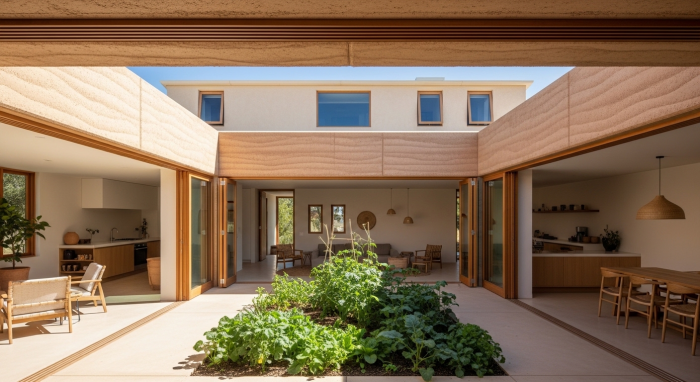
Regenerative architecture is an evolving approach that goes beyond sustainability. While sustainable design focuses on reducing environmental harm, regenerative architecture aims to restore, renew, and enhance the natural ecosystem through the built environment. In residential projects, this philosophy transforms houses into living systems that actively contribute to environmental health, human well-being, and long-term ecological balance.
1. Core Principles of Regenerative Architecture
a. Designing With, Not Against, Nature
Regenerative homes are planned in harmony with local ecosystems. Site analysis becomes crucial—studying sun paths, wind flow, soil condition, vegetation, and water cycles. The house is positioned and shaped to work symbiotically with these natural forces.
b. Net-Positive Impact
Instead of merely reducing energy or water consumption, regenerative houses aim to produce more energy, purify more water, and support more biodiversity than they consume.
c. Closed-Loop Systems
Waste is treated as a resource. Organic waste becomes compost, greywater is recycled for irrigation, and rainwater is harvested for domestic use.
2. Architectural Design Strategies
a. Bioclimatic Form & Orientation
The architectural massing responds to climate:
-
Tropical climates: Wide roof overhangs, cross ventilation, shaded terraces.
-
Temperate climates: South-facing glazing (or north-facing in the southern hemisphere) for passive solar gain.
-
Arid regions: Courtyard houses that cool interiors naturally.
The building envelope—walls, roofs, and openings—is designed to minimize mechanical cooling and heating loads.
b. Regenerative Material Selection
Material choice is central to architectural expression and ecological impact.
Common regenerative materials:
-
Bamboo (rapidly renewable)
-
Reclaimed wood
-
Rammed earth
-
Hempcrete
-
Recycled steel
These materials reduce embodied carbon while creating warm, tactile architectural aesthetics.
c. Living Roofs & Walls
Green roofs and vertical gardens function as insulation, biodiversity hubs, and rainwater buffers. Architecturally, they soften the building mass and visually merge the home with its landscape.
Design benefits:
-
Thermal regulation
-
Urban heat reduction
-
Habitat creation for birds and insects
-
Air purification
d. Water Regeneration Systems
Water design is integrated into spatial planning:
-
Rainwater harvesting roofs
-
Bioswales in landscape design
-
Constructed wetlands for wastewater treatment
-
Reflecting ponds that cool microclimates
These features become both functional infrastructure and aesthetic architectural elements.
3. Spatial Programming for Regenerative Living
a. Indoor–Outdoor Integration
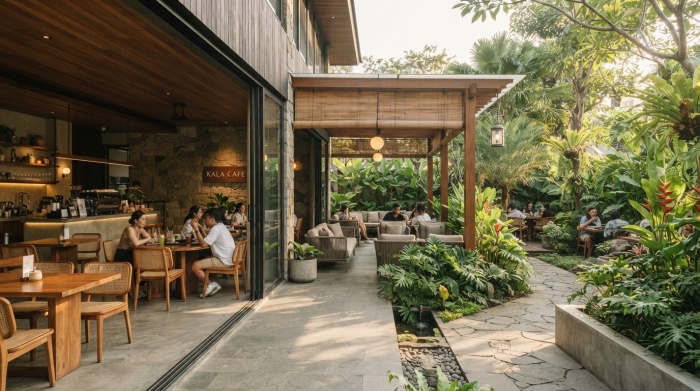
Large operable openings, courtyards, and semi-outdoor spaces blur boundaries between inside and outside. This encourages natural ventilation, daylight optimization, and stronger human connection to nature.
b. Edible Landscapes
Instead of decorative gardens alone, regenerative homes incorporate:
-
Food forests
-
Herb walls
-
Rooftop vegetable gardens
-
Aquaponic systems
Architecture supports food production through terraces, sunlight access, and irrigation planning.
4. Energy-Positive Architectural Systems
a. Solar Integration
Photovoltaic panels are no longer add-ons but integrated into roof geometry, shading devices, and façades.
b. Passive Design First
Before renewable tech is added, architects reduce energy demand through:
-
Thermal mass walls
-
High-performance insulation
-
Stack ventilation towers
-
Earth-sheltered forms
5. Structural & Landscape Synergy
Regenerative residential design treats landscape as part of the architecture, not an afterthought.
Examples:
-
Houses elevated to preserve natural water flow
-
Foundations designed to protect tree root systems
-
Native planting that restores soil health
-
Wildlife corridors integrated into site planning
6. Health & Well-Being Benefits
Regenerative homes are designed for human regeneration too:
-
Non-toxic materials improve indoor air quality
-
Daylight-rich interiors regulate circadian rhythms
-
Acoustic buffering from vegetation reduces stress
-
Views of greenery enhance mental health
This aligns architecture with biophilic design principles.
7. Challenges in Implementation
Despite its benefits, regenerative architecture faces several barriers:
-
Higher upfront design costs
-
Limited availability of regenerative materials in some regions
-
Need for interdisciplinary collaboration (architects, ecologists, engineers)
-
Regulatory constraints in urban areas
However, lifecycle savings and ecological value often outweigh initial investments.
Conclusion
The application of regenerative architecture in residential house design represents a paradigm shift—from buildings that consume resources to homes that restore ecosystems and enrich human life. Through climate-responsive forms, living systems integration, regenerative materials, and energy-positive strategies, houses become active participants in environmental healing.
As climate and urban challenges intensify, regenerative residential architecture offers not just a design trend but a necessary evolution—where architectural beauty, functionality, and ecology operate as one living system.
Our Service Locations
Bandung and West Java: Bandung Cimahi Sumedang Tasikmalaya Garut Subang Cianjur Sukabumi Ciamis Bogor Cirebon Karawang Cikampek
Jakarta and Surroundings: Jakarta Tangerang Banten Bogor Depok Bekasi
Indonesia: Java Bali Timor Sumatra Kalimantan Sulawesi Maluku Papua Lombok Flores
With experience in handling various projects in Jakarta and Bandung, we understand the urban character and natural environment in each city, and are able to respond to them with a contextual and classy design approach.
www.rytamautama.com