A beautiful garden doesn’t need constant watering or hours of upkeep. With thoughtful plant choices and a few practical design decisions, you can create a water-saving garden that handles hot, dry conditions and stays manageable throughout the year.
1. Why Choose a Water-Saving Garden?
A water-saving garden uses less water by matching plants and landscaping materials to local conditions. This can lower water use and help plants cope with hot spells, especially when the soil is covered and watering is efficient.
It can also be a low-maintenance garden. Fewer thirsty plants and smaller lawn areas mean less watering, mowing, and trimming. The aim is not to remove greenery, but to make the garden work with the climate.
2. Choose Drought-Tolerant Local Plants
Start with plants that are native to your region or already thrive in nearby gardens. Local plants are adapted to local rainfall, soils, and temperatures, so they often need less attention once established.
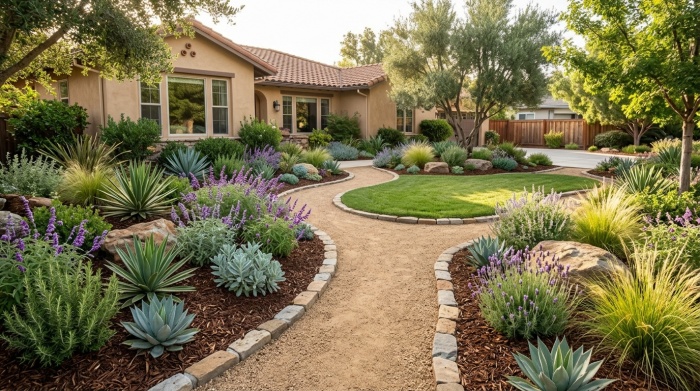
For a heat-resistant garden, look for plants with features that help them handle dry weather, such as small or silvery leaves, deep roots, or thick, water-storing foliage. Suitable choices vary by location, so check with a local nursery or gardening service before planting. Ask which drought-tolerant plants for your yard suit your sunlight, soil, and rainfall.
Group plants with similar water needs together. This makes it easier to water each area appropriately and avoids giving drought-tolerant plants more water than they need.
3. Use a Simple, Efficient Irrigation System
Watering efficiently helps plants get the moisture they need without wasting water. A drip line or soaker hose delivers water close to the roots, where plants can use it, and can reduce losses from wind and evaporation.
Water deeply but less often to encourage roots to grow further into the soil. Early morning is generally a good time to water, since less water is lost to midday heat. Adjust the schedule after rain, and check the soil before watering again.
For a small garden, a hose with a shut-off nozzle can be enough. A simple timer can also help keep watering consistent, but it should be adjusted to the season and the needs of the plants.
4. Use Stone, Gravel, and Mulch to Reduce Evaporation
Bare soil loses moisture quickly in hot weather. Covering it with mulch helps keep the soil cooler and slows evaporation. Organic mulch, such as bark or composted leaves, can also improve the soil as it breaks down. Keep mulch a little away from plant stems and tree trunks.
Gravel and stone can work well around paths, seating areas, or plants suited to dry conditions. They reduce exposed soil and can create a tidy, heat-resistant garden design. However, stone can absorb and radiate heat, so avoid placing it too close to plants that prefer cooler roots.
5. Limit Lawn and Hard-to-Maintain Surfaces
Lawns often need regular watering and mowing, particularly in hot climates. Reducing the lawn area is one of the simplest ways to create a low-maintenance garden. Keep grass where it is useful—for example, as a play space or a clear walkway—and use planting beds, mulch, or permeable paths elsewhere.
Permeable surfaces, such as gravel or stepping stones with gaps, let some rain reach the soil. If you use solid paving, consider how it affects drainage and nearby plants. A balanced layout with defined paths and compact planting areas can make the garden easier to care for while still feeling green and welcoming.
A water-saving garden begins with choices suited to your local climate: resilient plants, targeted watering, covered soil, and a smaller lawn. Together, these ideas can create an attractive garden that uses water wisely and takes less work to maintain.
Our Service Locations
Bandung and West Java: Bandung, Cimahi, Sumedang, Tasikmalaya, Garut, Subang, Cianjur, Sukabumi, Ciamis, Bogor, Cirebon, Karawang, and Cikampek.
Jakarta and Surrounding Areas: Jakarta, Tangerang, Banten, Bogor, Depok, and Bekasi.
Across Indonesia: Java, Bali, Timor, Sumatra, Kalimantan, Sulawesi, Maluku, Papua, Lombok, and Flores.
With extensive experience in handling diverse projects in Jakarta and Bandung, we possess a deep understanding of the urban character and natural environment of each city, allowing us to respond with a design approach that is both contextual and sophisticated.
www.rytamautama.com
www.spacialandscape.com