The custom furniture industry has experienced steady growth in recent years, driven by increasing consumer demand for personalized interiors, unique design aesthetics, and space-efficient solutions. A feasibility study for a custom furniture business is essential to evaluate its viability, profitability, operational requirements, and market opportunities before launching.
1. Market Analysis
Target Market
The primary customers of a custom furniture business include:
-
Homeowners seeking personalized interior solutions
-
Property developers and real estate agencies
-
Hotels, cafés, and restaurants
-
Corporate offices and co-working spaces
-
Interior designers and architects
Market Trends
Current trends influencing demand include:
-
Minimalist and multifunctional furniture
-
Sustainable and eco-friendly materials
-
Smart storage solutions for small homes
-
Luxury bespoke furniture for premium segments
Growing urbanization and the rise of apartment living have increased the need for made-to-measure furniture that maximizes space efficiency.
Competitor Analysis
Competitors typically fall into three categories:
-
Mass-produced furniture retailers
-
Local carpentry workshops
-
Premium custom furniture studios
A new entrant can compete through design innovation, superior craftsmanship, faster turnaround time, or competitive pricing.
2. Technical and Operational Feasibility
Location & Workshop Requirements
A custom furniture workshop should ideally be located in an area with:
-
Easy logistics access
-
Affordable rental costs
-
Adequate space for machinery and storage
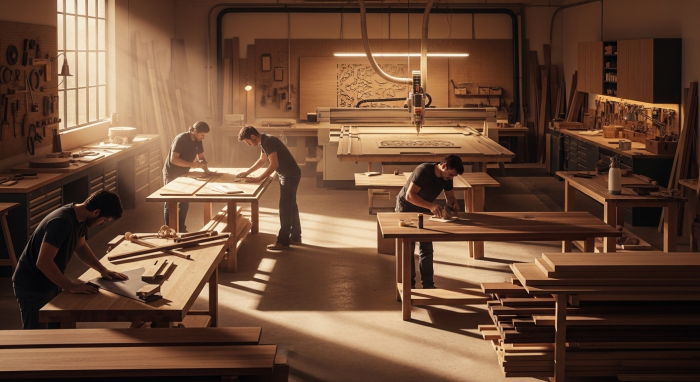
Machinery & Equipment
Essential equipment includes:
-
Panel saws and table saws
-
CNC routers
-
Planers and jointers
-
Sanding machines
-
Spray painting booth
-
Hand tools and assembly equipment
Raw Materials
Common materials used:
-
Solid wood (teak, oak, mahogany)
-
Engineered wood (plywood, MDF, HDF)
-
Metal frames
-
Glass and acrylic
-
Upholstery fabrics and foam
Supplier reliability is crucial to maintain consistent quality and production timelines.
Production Process
-
Client consultation & design briefing
-
2D/3D design rendering
-
Material selection & costing
-
Production & assembly
-
Finishing & quality control
-
Delivery & installation
3. Financial Feasibility
Initial Investment Components
-
Workshop rent & renovation
-
Machinery purchase
-
Raw material inventory
-
Labor recruitment & training
-
Marketing & branding
-
Software (CAD design tools)
Estimated Cost Structure
-
Machinery & tools: 35–45%
-
Workshop setup: 15–20%
-
Materials: 20–25%
-
Marketing & operations: 10–15%
Revenue Streams
-
Residential custom furniture
-
Commercial fit-out projects
-
Interior packages
-
Furniture refurbishment services
Profit Margin
Custom furniture businesses typically enjoy higher margins (25–45%) compared to mass production due to bespoke pricing and design value.
Break-Even Analysis
Most small-to-medium workshops reach break-even within 18–36 months, depending on project volume and operational efficiency.
4. Marketing and Sales Strategy
Brand Positioning
Position the brand as:
-
Premium bespoke craftsmanship
-
Affordable custom solutions
-
Eco-friendly furniture maker
Marketing Channels
-
Social media (Instagram, Pinterest, TikTok)
-
Website & SEO optimization
-
Collaboration with interior designers
-
Showroom displays
-
Property developer partnerships
High-quality portfolio visuals and client testimonials significantly influence purchasing decisions.
5. Human Resource Requirements
Key roles include:
-
Furniture designers
-
Carpenters & craftsmen
-
Finishing specialists
-
Project supervisors
-
Sales & marketing staff
Skilled labor is one of the most critical success factors in custom furniture production.
6. Risk Analysis
Operational Risks
-
Material price fluctuations
-
Production delays
-
Skilled labor shortages
Market Risks
-
Economic downturn affecting property sector
-
Competition from imported furniture
-
Changing design trends
Mitigation Strategies
-
Maintain multiple suppliers
-
Invest in staff training
-
Diversify product offerings
7. Legal and Regulatory Considerations
Business owners must ensure:
-
Business registration & permits
-
Tax compliance
-
Workplace safety standards
-
Environmental regulations (wood sourcing legality)
Sustainable sourcing certification can also enhance brand credibility.
A custom furniture business presents strong market potential due to rising demand for personalized, space-efficient, and design-driven interiors. While the venture requires significant upfront investment in machinery, skilled labor, and materials, it offers attractive profit margins and long-term growth opportunities. Conducting a comprehensive feasibility study helps entrepreneurs minimize risks, optimize operational planning, and build a competitive advantage in the bespoke furniture market.
Our Service Locations
Bandung and West Java: Bandung Cimahi Sumedang Tasikmalaya Garut Subang Cianjur Sukabumi Ciamis Bogor Cirebon Karawang Cikampek
Jakarta and Surroundings: Jakarta Tangerang Banten Bogor Depok Bekasi
Indonesia: Java Bali Timor Sumatra Kalimantan Sulawesi Maluku Papua Lombok Flores
With experience in handling various projects in Jakarta and Bandung, we understand the urban character and natural environment in each city, and are able to respond to them with a contextual and classy design approach.
www.rytamautama.com